
Ring Clutch vs Lifting Clutch for Precast Concrete
Last Updated: 2026-11-26 · Wewin Magnet
Quick answer: A ring clutch and a lifting clutch are not two brands of the same tool. They belong to two different precast lifting systems. A lifting clutch (also called a spherical head or universal head clutch) locks onto a spherical head anchor sitting in a half-ball recess. A ring clutch locks onto a flat spread (plate) anchor sitting in a pocket formed by a rubber former, using a lever that is turned 90° until the latch lies flat on the concrete. You don't choose the clutch first: the anchor designed into the element decides which clutch you use, and the two systems cannot be mixed.
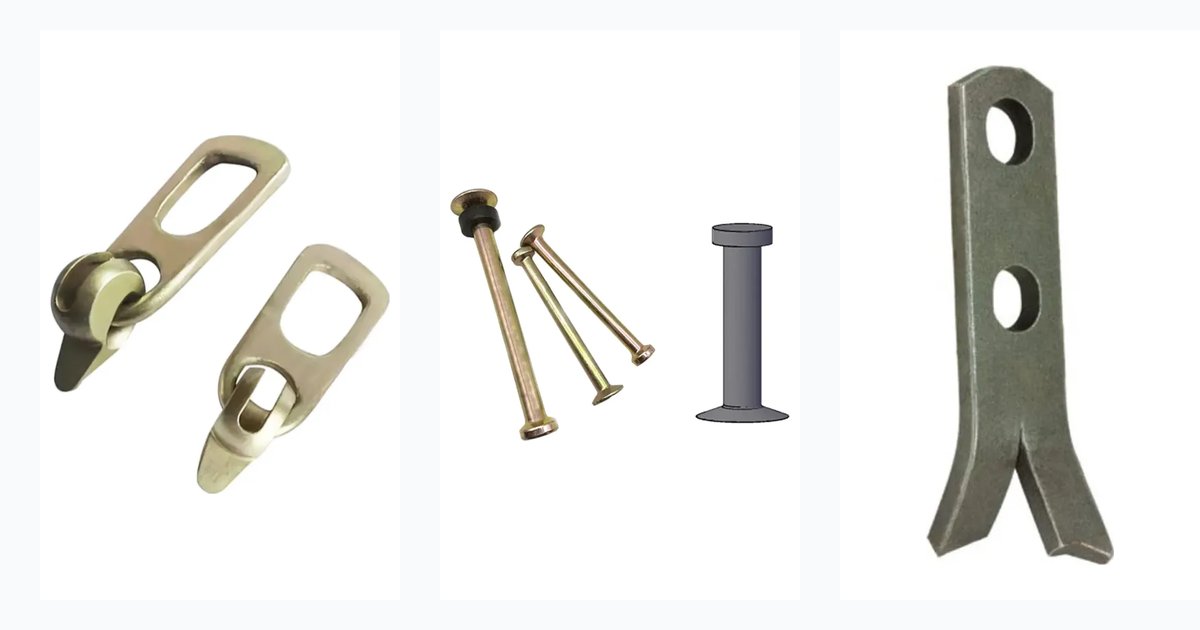
Names vary by market, which is where most ordering mistakes start. Australian safety guidance uses "lifting clutch" as the umbrella term and calls the edge-lift clutch a ring clutch or "donut" (NSW Government, concrete lifting clutches). Supplier listings, including some from China, also use the two names inconsistently. So when you buy, match by anchor head type and load group, not by the product name.
What is a lifting clutch (spherical head clutch)?
A spherical head lifting clutch has a slotted body and a bail (the loop the crane hook or sling attaches to). It works with a spherical head lifting anchor: a round steel rod with a forged ball-shaped head on top and a wider foot at the bottom, cast into the element.
- Before the pour, the anchor head is held in a rubber recess former or a steel magnetic recess former. The former leaves a half-ball pocket around the head.
- After demoulding, the clutch head drops into the pocket over the anchor head.
- The clutch is rotated around the anchor head by hand until fully engaged, following the manufacturer's instructions. The NSW guide says hand pressure only, no hammers.
- The bail takes the crane load. Once the element is supported and the clutch is unloaded, it is turned back and removed.
Face anchors of this type are generally specified where the load is mainly tension, for example a straight vertical lift out of the mould (NSW). Typical elements are slabs, beams, columns, stairs and wall panels lifted from the face.
What is a ring clutch (spread anchor clutch)?
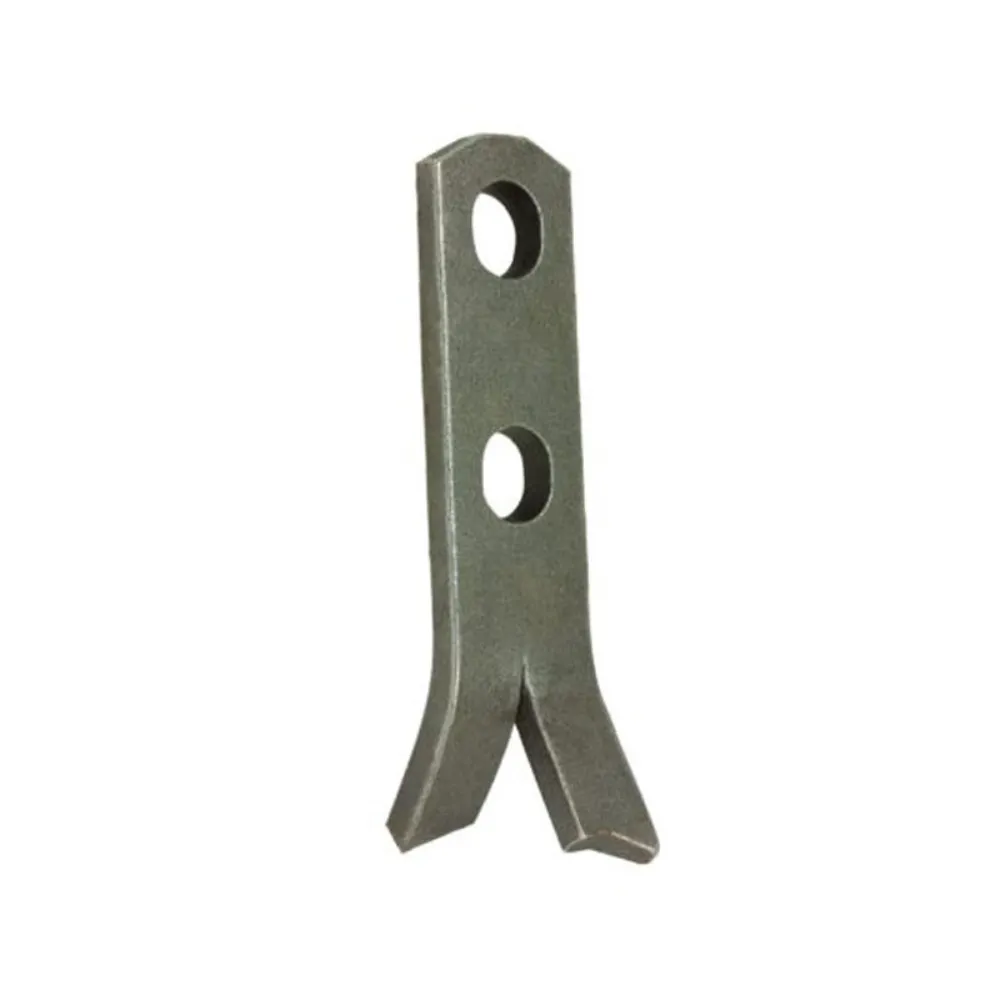
A ring clutch works with a spread anchor: a flat steel plate with a hole near the top for the clutch, a split "fishtail" foot that spreads the load into the concrete, and a second hole that lets you add extra reinforcement where needed. The installation sequence on our spread anchor data sheet is:
- The engineer selects the spread anchor for every lifting stage, using the axial, diagonal or tilting capacity that applies and any extra reinforcement required.
- Seat it in the matching rubber former and fix the former to the mould with a holding plate or holding screw.
- Check the anchor position before pouring.
- Once the concrete reaches the required strength and the former is removed, the anchor head sits in a pocket below the surface. Its safe working load can be read through the opening.
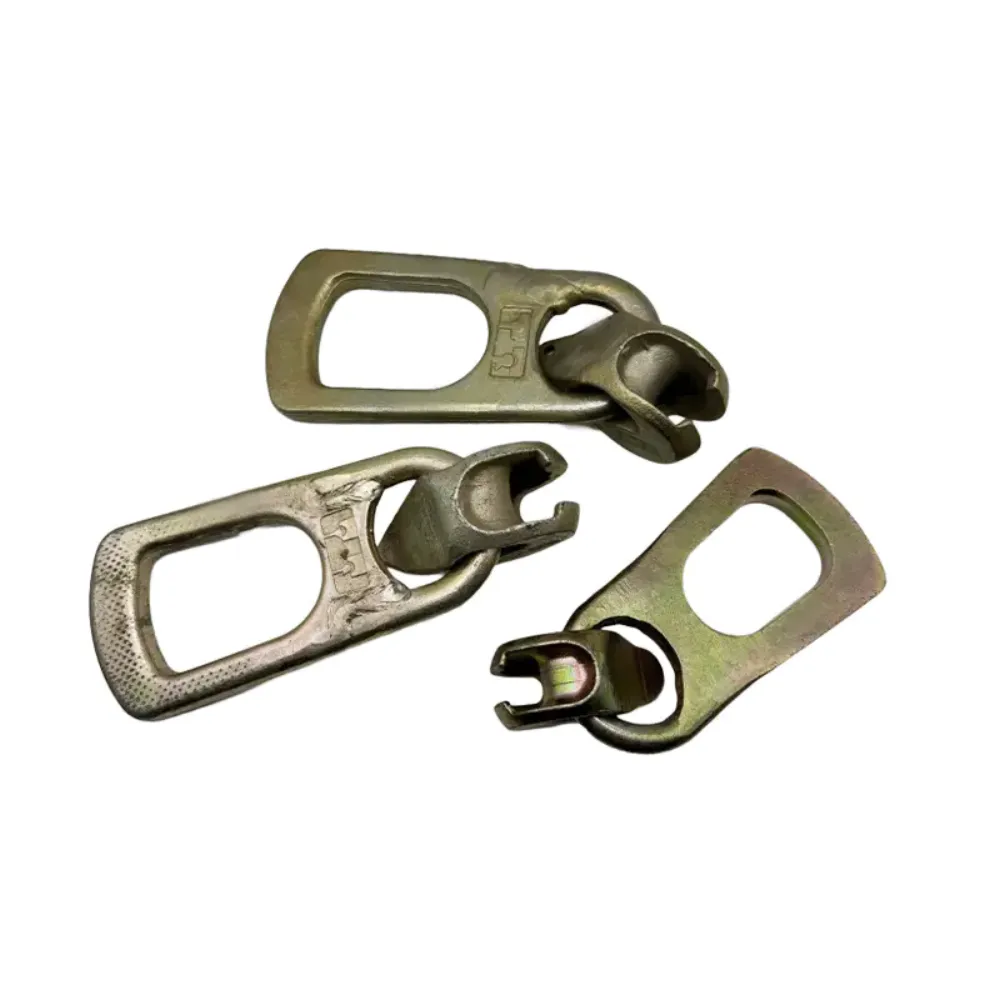
- Place the ring clutch on the anchor and rotate the lever 90° until the latch is flat on the concrete surface and engaged. Follow the clutch maker's instructions; on conventional edge clutches the locking-ring handle should face the direction of lift so it cannot open under load.
- Lift. The clutch's swivel joint lets the sling pull from different directions. Once the element is supported and the clutch is unloaded, release it by reversing step 5.
Because the plate anchor can be placed in the face, back or edge of a panel, spread anchor and ring clutch systems are common where elements are stripped flat and then turned from horizontal to vertical. Australian guidance notes that plate anchors are preferred for edge lifts with significant shear, and that spherical head clutches should not be used to rotate thin panels by their edges (NSW). Some locking-ring designs can only be unlocked above 35° from horizontal, which stops them disconnecting while loaded (NSW, clutch rigging and panel rotation).
Ring clutch vs lifting clutch: side-by-side
| Lifting clutch (spherical head) | Ring clutch (spread anchor) | |
|---|---|---|
| Anchor it fits | Spherical head anchor (round rod, ball head, foot) | Spread anchor / plate anchor (flat plate, fishtail foot) |
| Recess shape | Half-ball pocket from a rubber or steel magnetic former | Pocket from a rubber former |
| How it locks | Clutch body rotated around the anchor head by hand | Lever rotated 90° until the latch lies flat on the concrete |
| Typical load direction | Mainly tension (face lifts) | Face, back or edge; used for tilting panels from flat to vertical |
| Wewin anchor load groups | 1.3 to 20 t in our standard table; up to 32 t on request | 2.5, 5, 10 and 26 t groups, axial ratings from 1.4 t to 22 t |
| Main ordering trap | Different load groups can share one head size (see below) | One clutch size covers several anchor ratings (see below) |
Which one should you choose?
- Follow the drawing. The precast engineer specifies the anchor, its load group and its embedment for each element. The clutch follows the anchor. If the drawing shows spherical head anchors, you need lifting clutches; if it shows spread anchors, you need ring clutches.
- Straight vertical lifts of slabs, beams and columns: spherical head anchors with lifting clutches are the usual choice, because the load is mainly tension.
- Thin wall panels that are tilted or turned: look at plate (spread) anchors and edge-lift systems, which the NSW guide prefers for edge lifts with significant shear.
- Standardise per plant. Running one system across most elements means fewer clutch sizes in the yard and fewer chances of grabbing the wrong one.
- Don't mix brands blindly. The clutch and the anchor should come from the same manufacturer, or both manufacturers should approve them as compatible (NSW).
How to match load groups (the part buyers get wrong)
A clutch is sized to the anchor head, but the safe load is set by the anchor and the concrete. In our spherical head anchor table, pairs of load groups share the same head diameter:
| Load group | Shaft Ø (mm) | Head Ø (mm) | Foot Ø (mm) | Lengths in our table (mm) | Rubber recess former |
|---|---|---|---|---|---|
| 1.3 t | 10 | 19 | 25 | 55–240 | WWRF-B1 |
| 2.5 t | 14 | 26 | 35 | 65–280 | WWRF-B2 |
| 4.0 t | 18 | 36 | 45 | 75–240 | On request |
| 5.0 t | 20 | 36 | 45 | 65–480 | WWRF-B3 |
| 7.5 t | 24 | 46 | 60 | 85–680 | On request |
| 10 t | 28 | 46 | 70 | 85–680 | WWRF-B4 |
| 15 t | 34 | 69 | 98 | 140–400 | WWRF-B5 |
| 20 t | 38 | 69 | 98 | 200–500 | On request |
4.0 t and 5.0 t anchors share a 36 mm head, 7.5 t and 10 t share 46 mm, and 15 t and 20 t share 69 mm. A clutch that physically fits the head tells you nothing about capacity. Read the load group stamped on the anchor and on the clutch, and use a clutch whose working load limit is equal to or higher than the anchor's load class (NSW).
Length is a separate decision. Within one load group the anchor comes in several lengths (for 5.0 t, from 65 mm to 480 mm in our table). Embedment, element thickness, edge distance and concrete strength at lifting decide the length, and concrete breakout can govern before the steel does. That is the engineer's call, not the clutch's.
Spread anchors work the other way round. One clutch group covers several anchor capacities. Our 2.5 t group, for example, includes plates rated 1.4 t, 2 t and 2.5 t axial (6, 8 and 10 mm thick), and the 26 t group includes 14 t and 22 t plates. One ring clutch size fits all the plates in its group, so the clutch size alone does not tell you the capacity. The lift is limited by the clutch, by the installed anchor's capacity in that load direction, and by the rest of the rigging.
Safe-use rules that apply to both
- Keep the clutch in line with the load. Never lift with the clutch connected sideways or at right angles. Side-loading can bend the anchor or break the clutch (NSW, lifting methods).
- Connect by hand. If the clutch will not close, clean the recess or check the size. Don't hammer it.
- Clean and, for rotation, lubricate the recess. If the clutch sticks against the recess wall during rotation, it can suddenly slip and shock-load the rigging.
- Inspect before every lift. Remove any clutch that is damaged, distorted or modified. In Australia, AS 3850.1 also requires clutches to be proof-loaded to 1.2 × WLL every year.
- Don't weld lifting anchors. Welding changes the steel and voids the rating.
Frequently asked questions
Is a ring clutch the same as a lifting clutch?
Not in the usual product sense. In Australian terminology a ring clutch is one type of lifting clutch. In most catalogues, though, "lifting clutch" means the clutch for spherical head anchors and "ring clutch" means the clutch for flat spread (plate) anchors. Because names vary, confirm the anchor type and load group rather than the product name.
Can I use a lifting clutch on a spread anchor?
No. A spherical head clutch is shaped to lock around a ball head and cannot lock onto a flat plate anchor. Use the ring clutch made for that anchor system.
Can a 5 t clutch lift a 4 t anchor?
Our 4.0 t and 5.0 t anchors both have a 36 mm head, but fit alone does not make a clutch approved for an anchor. Use the clutch model the anchor maker approves for that load group, never a clutch rated below the anchor's load class. The lift is limited by the lowest of the clutch rating, the anchor rating and the concrete capacity at that anchor.
Which recess former do I need for spherical head anchors?
Rubber recess formers are fixed with a threaded rod and wing nut, so check that this fixing suits your mould. Steel magnetic recess formers are held by magnets on steel moulds. Our steel magnetic formers are rated 170 kg pull force for 1.3 t up to 650 kg for 10 t.
How often should lifting clutches be inspected?
Check them before each lift for wear, distortion and cracks, and follow your local standard for periodic proof testing. In Australia that is an annual proof load to 1.2 × WLL under AS 3850.1.
Next step
Wewin Magnet supplies precast lifting anchors, including spherical head anchors from 1.3 t to 20 t (32 t on request), spread anchors, and the lifting clutch for spherical head anchors. We also make the rubber and magnetic recess formers that go with them. Send us the element type, its weight, the number of lifting points and the anchor load group on your drawing. We'll confirm matching anchors, clutches and formers. For spread anchors, include the load group and axial rating you need. Request a quote.
Looking for a supplier?
Browse our shuttering magnets, recess formers and lifting anchors, or send an inquiry.